
Talking Stage Red Flags You Should Never Ignore
We live in a wild era of communication. Instagram DMs, Snapchat streaks, TikTok comments that spiral into hours-long voice calls, platforms built specifically for meaningful connection like the ones covered in this Meetheage review — the ways to meet and talk to someone new seem to multiply every year. More people than ever are getting to know each other online before they ever share the same physical space. And everyone, including me, is navigating some form of textationship, trying to figure out whether the person on the other side of the screen is genuinely worth their time.
But here’s what nobody really warns you about: online communication makes it surprisingly easy to miss the signs that something is off. The excitement of a new connection — the notifications, the butterflies when their name pops up, the late-night conversations that stretch past 2 a.m. — has a way of turning the volume down on your instincts. That’s exactly why recognizing talking stage red flags early matters so much. Not every conversation is worth your emotional energy, and the sooner you spot the warning signs, the sooner you can stop investing in people who are manipulative, unavailable, or simply not serious, and redirect that energy somewhere it actually deserves to go.
What Is the Talking Stage?
The talking stage is that pre-relationship phase — the texting, the voice notes, maybe the occasional video call — where two people are getting to know each other before things become official. There are no labels yet, no formal commitment, just two people figuring out whether there’s something real there.
In theory, it’s one of the most exciting parts of any new connection. In practice, it’s also one of the murkiest. Because without clear expectations on either side, it can be genuinely hard to know what’s normal and what’s a problem. Which is exactly why stage red flags get missed so often, sometimes until they’ve already done real damage.
Why Red Flags Are So Easy to Miss Early On
I’ll be honest — I’ve missed them myself. And I think most people have, if they’re being truthful.
There are a few reasons this happens. The biggest one is simply the excitement of something new. When you’re in the early stages of getting to know someone and everything feels fresh and full of possibility, you’re essentially wearing rose-colored glasses. You focus on what’s going well, and you rationalize the parts that aren’t. Maybe they’re just busy. Maybe that comment was a joke. Maybe I’m reading into it.
Research backs this up, too. A re-analysis of dealbreaker factors in mate choice found that people — especially those with high hopes for a connection — are significantly more likely to downplay negative traits early on, particularly when they’re already emotionally invested.
Then there’s the fear of being alone, which nobody likes to admit to but almost everyone has felt. When you really like someone, the thought of walking away from the possibility of something good is uncomfortable. So you wait. You give more chances. You explain away behavior that, in a different context, you’d never tolerate.
And finally, there’s the simple confusion about what’s actually normal in a talking stage. If you haven’t had many healthy relationship models to reference, it can be hard to distinguish between “this person is nervous and still opening up” and “this person is waving a giant red flag in my face.”
15 Talking Stage Red Flags You Shouldn’t Ignore

1. Inconsistent Communication
One day, they’re texting you every hour. The next, you don’t hear from them for three days, and the only explanation you get is “been busy.” Sound familiar?
Inconsistent communication is one of the most common red flags in the talking stage, and also one of the easiest to explain away. But here’s what that hot-and-cold pattern almost always signals: you are not a priority. Someone who is genuinely interested in you will make a consistent effort — not perfect, not round-the-clock, but consistent.
If you find yourself anxiously analyzing the gap between a text message and their reply, that anxiety is information. Pay attention to it.
2. They Only Reach Out Late at Night
If the only time you hear from someone is after 10 p.m., ask yourself what that pattern is really telling you. Late-night-only contact is one of the clearest signs of a failed talking stage in the making — it usually means you’re a convenience, not a genuine interest.
A person who wants to actually know you will want to talk to you during the day, too. They’ll check in. They’ll send something funny they saw and thought of you. They won’t just appear when it’s dark and they’re bored.
3. Avoiding Personal Questions
If every time you ask something meaningful — about their family members, their past, what they actually want — you get a vague deflection or a subject change, that’s a red flag worth noting.
Some people take time to open up, and that’s completely fair. But there’s a difference between someone who opens up gradually and someone who consistently avoids building any depth at all. Healthy relationships grow when both people are willing to share and reflect. If it’s always one-sided, the foundation is already shaky.
When you’re first figuring out conversation starters for texting and getting to know someone, the natural flow should feel mutual. If you’re the one carrying every meaningful exchange, that’s not a green flag — it’s the opposite.
4. Overly Secretive About Their Life
There’s a difference between privacy and secrecy. Privacy is healthy — we all have parts of our lives we share selectively. Secrecy, on the other hand, feels evasive. It feels like they’re carefully managing what you’re allowed to know.
If someone is vague about where they live, what they do, who they spend time with, or what they want — and this vagueness persists week after week — it may signal emotional unavailability, dishonesty, or the fact that there’s something (or someone) they’re not telling you about. Trust your gut feeling on this one.
5. Love Bombing
This one is sneaky because it feels good at first. Love bombing is when someone rushes the connection — flooding you with attention, compliments, declarations of how special you are, and sometimes even future talk (“I can already picture us doing this together”) — very early on.
It feels flattering. It feels like intensity and chemistry. But what it actually is, more often than not, is a manipulation tactic designed to create dependency before you’ve had the chance to evaluate whether this person actually treats you well. Genuine connection builds gradually. Anyone who’s trying to rush it past your defenses is worth slowing down for a second look.
6. Trash-Talking Every Ex
How someone talks about their past relationships tells you a lot about who they are.
If every single ex is “crazy,” every past situation was entirely the other person’s fault, and they take zero accountability for any of it — that’s a huge red flag. It doesn’t mean they need to speak glowingly of everyone they’ve ever been with. But a complete absence of self-reflection about past relationships usually means one thing: the same patterns are about to repeat, and this time, you’ll be the one on the other side of them.
Emotional maturity shows up in the way people talk about their own role in what didn’t work. Watch for it.
7. They Make You Feel Like You’re Always Initiating
Consistently being the one to start conversations is exhausting — and it’s also a sign. If you stopped texting first, would you hear from them at all?
One-sided effort in the talking stage is a clear indicator that the interest isn’t equal. A genuinely interested person shows up. They reach out. They don’t make you feel like you’re chasing someone who tolerates your attention but doesn’t quite return it.
8. Disrespectful Toward Others
I’ve always believed that how someone talks about — and to — other people reveals everything about how they’ll eventually talk about and to you.
If they’re rude to service staff, speak dismissively about friends, make cruel jokes about people online, or constantly criticize others, that’s not just a personality quirk. It’s a preview. Disrespectful behavior toward others can signal deeper issues that will eventually show up in how they treat you once the novelty of the talking stage wears off.
9. Controlling Behavior — Even Subtle Versions
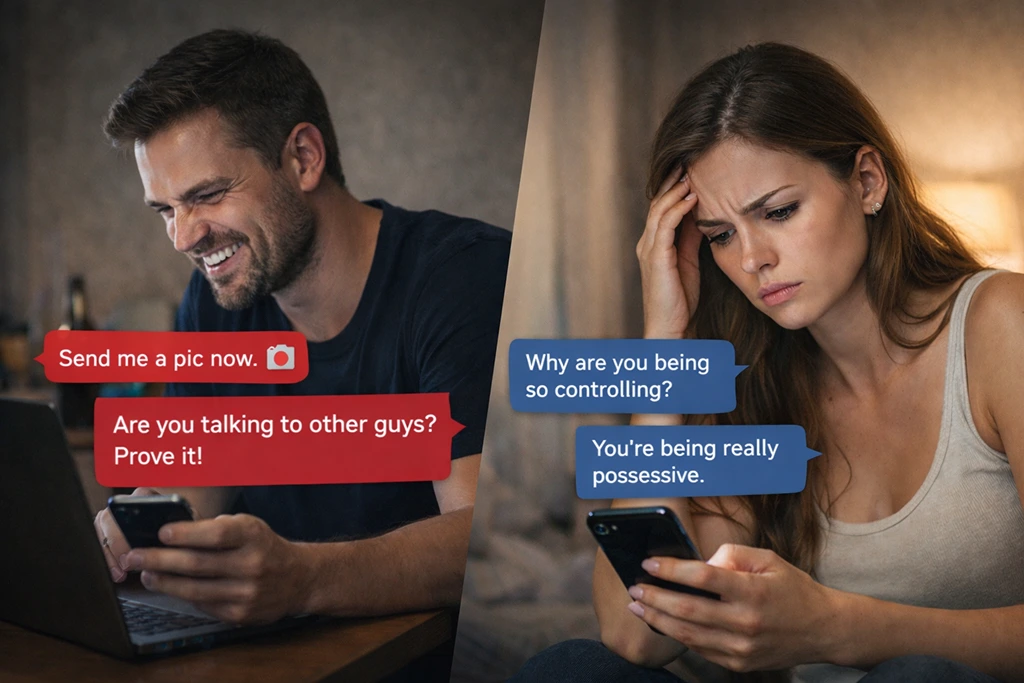
Controlling behavior doesn’t always look like obvious possessiveness. In the early stages of getting to know someone, it can be surprisingly subtle: demanding constant location updates, getting upset when you don’t reply quickly enough, questioning who you’re with and why, or making pointed comments designed to make you feel guilty for having your own life.
This kind of behavior is a major red flag. A healthy relationship is built on mutual respect for each person’s autonomy — and someone who tries to control your personal space before you’ve even become official is showing you exactly who they plan to be later on. Set firm boundaries early, and pay close attention to how they respond to those boundaries.
10. Refusing to Define the Relationship
I’m not saying you need to have “the talk” after two weeks. But if weeks or months pass and any mention of where things are headed is met with deflection, discomfort, or a subject change — that tells you something.
Avoiding defining the relationship often means one of two things: they’re not sure what they want, or they know what they want and it’s not what you’re hoping for. Either way, you deserve clarity. You deserve to be on the same page, not left guessing about whether you’re even a priority.
11. Gaslighting or Manipulative Behavior
This one is serious. Gaslighting — making you question your own feelings, reframing situations so that you end up apologizing for having a reasonable reaction, twisting conversations until you’re not sure what actually happened — can begin surprisingly early in the talking stage.
It often starts small: “You’re so sensitive,” “That’s not what I said,” “You’re overthinking it.” But over time, manipulative behavior like this erodes your self-esteem and your ability to trust your own perceptions. If you regularly walk away from conversations with this person feeling confused, second-guessing yourself, or somehow responsible for something that didn’t start with you — that’s not a small thing. That’s emotional abuse beginning to take root.
Trust your own feelings. You’re allowed to feel what you feel.
12. Never Asks About You
A conversation should feel like a two-way street. If someone talks endlessly about themselves — their interests, their opinions, their day — without showing any genuine curiosity about yours, that’s a red flag when getting to know someone.
Being with a person who doesn’t actually want to know you is one of the lonelier feelings there is. Early on, it can be easy to mistake their intensity or charisma for genuine connection. But connection requires reciprocity. If they’re not asking about your life, your thoughts, or your feelings — they’re not interested in a relationship with you. They’re interested in having an audience.
13. Hot and Cold Behavior
One week they’re all in — responsive, warm, seemingly excited about you. The next week they’re distant, short in their replies, and generally giving off the energy of someone who’s not sure why you’re still texting them.
This kind of unpredictable behavior causes anxiety for a reason. It keeps you in a state of uncertainty, always working a little harder to get back to where things were. It can indicate a lack of emotional investment, or it can be a deliberate — even unconscious — way of keeping you off-balance and easier to manage. Neither interpretation is a good sign.
14. Lack of Accountability
Nobody is perfect. The question is never whether someone makes mistakes — it’s whether they own them.
A person who never apologizes, always has an excuse, or finds a way to make every misunderstanding your fault is showing you a significant red flag. Lack of accountability is one of the clearest indicators of emotional immaturity, and it’s also one of the hardest traits to change in a partner. In a healthy relationship, both people can say “I was wrong” — and mean it.
15. Your Gut Is Telling You Something
And finally, this one is less concrete but no less real. If you often feel anxious after talking to this person, if you feel like you’re walking on eggshells, or if something just feels off but you can’t quite name it, please listen to that.
Your instincts exist for a reason. Their pattern recognition is built from everything you’ve experienced and observed. They don’t always speak loudly, and they don’t always give you words to explain themselves. But they are almost always right. If you regularly feel worse about yourself after talking to someone you’re supposed to be getting to know, that’s not a small thing. That’s your gut telling you what your heart isn’t ready to hear yet.
Signs the Talking Stage Is Not Going Well — The Overall Picture

Individual red flags matter, but sometimes what you really need to look at is the overall pattern of how a talking stage feels.
Here are some signs the talking stage is not going well, beyond any single behavior:
- You feel more anxious than excited most of the time
- You’re constantly analyzing their messages, looking for hidden meaning
- You’ve already made excuses for them to your friends or family members
- Conversations feel like work, like something you have to manage rather than enjoy
- You don’t look forward to hearing from them the way you did at the beginning
- You feel lonelier after talking to them than before
Any one of these can have innocent explanations. But if several of them are true at once, you’re not being paranoid — you’re picking up on a real unhealthy dynamic.
Red Flags When Talking to Someone Online Specifically
There are a few red flags that are particular to the online talking stage — behaviors that show up specifically in text-based communication that are worth knowing:
| Online Red Flag | What It Often Means |
|---|---|
| Refuses to video call after weeks of texting | May not be who they claim to be |
| Love-bombs immediately via DMs | Creating dependency before trust is established |
| Pushes to move off the app very quickly | Avoids a record of the conversation; potential red flag |
| Claims to be extremely busy but is always online | Selective availability — you’re not a priority |
| Profile photos seem inconsistent or suspiciously perfect | Possible catfishing or misrepresentation |
| Only texts late at night | You may be a backup option, not a genuine interest |
| Avoids any conversation that goes beneath the surface | Not looking for real connection |
These red flags when first talking to a guy or anyone online can be harder to read than in-person signals, precisely because you don’t have body language, tone of voice, or shared environment to help you interpret things. That’s why it pays to be a little more deliberate about what you notice — and what you choose to act on.
What To Do When You Spot Red Flags
Spotting red flags in a talking stage doesn’t automatically mean you have to end the conversation. But it does mean you need to pay attention.
Here’s a practical approach:
Name it to yourself first. Before you do anything else, acknowledge what you’re noticing without immediately explaining it away. Saying “this pattern is bothering me” to yourself is the first step toward acting on your own behalf.
Use honest communication. If a behavior is something that could be addressed, bring it up. Use “I” statements to express how certain behaviors make you feel — not accusatory, just honest. “When I don’t hear from you for several days after we’ve been talking every day, I feel uncertain about where things stand” is specific, fair, and invites a real conversation.
Set a boundary and watch what happens. Someone who respects you will respond to a reasonable boundary with respect. Someone who dismisses it, gets defensive, or turns it back on you is telling you something very important about who they are.
Know the difference between a pattern and a one-off. One canceled plan is life. Five canceled plans is a pattern. One weird comment might be nerves. A consistent thread of disrespect is character. Context always matters — but repeated behavior is the data point that actually counts.
And when you need to — walk away. Ignoring red flags in relationships can lead to emotional distress, eroded self-esteem, and toxic dynamics that take a long time to untangle. The earlier you recognize what’s happening and make a clear-eyed decision, the more you protect yourself from that cycle.
You deserve a talking stage that feels good. Not perfect — but warm, mutual, and honest. That’s not too much to ask for.
The Bottom Line
The talking stage — with all its late-night conversations, half-read receipts, and hopeful uncertainty — is genuinely exciting. And it should be. Getting to know someone new, feeling that spark of possibility, wondering if this might actually be something real: that’s one of the best parts of human experience.
But excitement is not the same thing as safety. And the fact that someone makes you feel something doesn’t mean they’re treating you well.
Red flags are not obstacles to your happiness — they’re information. They’re the early data points that tell you whether this person is likely to add to your life or subtract from it. Recognizing them isn’t pessimistic. It’s self-aware. And self-awareness, in the talking stage and everywhere else, is the thing that saves you the most time and the most heartache.
Trust yourself. Notice what you notice. And remember: healthy relationships grow from foundations where both people show up with honesty, consistency, and genuine care — not just when it’s convenient, but as a pattern you can actually count on.
You deserve that. Don’t settle for less just because the alternative feels uncertain.
FAQ
How many red flags is too many in the talking stage?
There’s no exact number, but a useful rule of thumb is this: one red flag might be worth a conversation; a pattern of red flags is worth a decision. If you’re regularly noticing behavior that makes you feel anxious, disrespected, or confused — and it isn’t improving — that’s enough.
Can red flags in the talking stage go away over time?
Some behaviors do improve, especially when they stem from nerves or a lack of communication skills that someone is genuinely willing to work on. But deep patterns — controlling behavior, manipulative behavior, lack of accountability, emotional unavailability — rarely disappear without serious self-awareness and effort on the other person’s part. Hope is not a strategy.
Is it normal to feel anxious during the talking stage?
Some nervousness is a normal part of any new connection. But if you feel anxious most of the time, if you feel like you’re constantly waiting for the other shoe to drop, or if talking to this person makes you feel worse about yourself — that anxiety is telling you something worth listening to.
What’s the difference between a red flag and a deal breaker?
A red flag is a warning sign — something that signals a potential problem and warrants attention. A deal breaker is a firm limit — something you know you cannot accept in a relationship regardless of other factors. Both matter. Red flags deserve honest communication and observation. Deal breakers deserve immediate action.
Should I bring up red flags directly, or just move on?
It depends on the flag and on what you want. If it’s a behavior that could genuinely improve with honest conversation, bring it up — you might be surprised. If it’s a pattern that’s already repeated itself several times despite your discomfort, moving on is a completely reasonable choice. You don’t owe anyone a third, fourth, or fifth chance to show you who they are.
How long should the talking stage last?
Most people find that somewhere between a few weeks and three months gives both people enough time to get a genuine read on each other. Longer than that without any movement toward defining the relationship can itself be a sign worth paying attention to.
